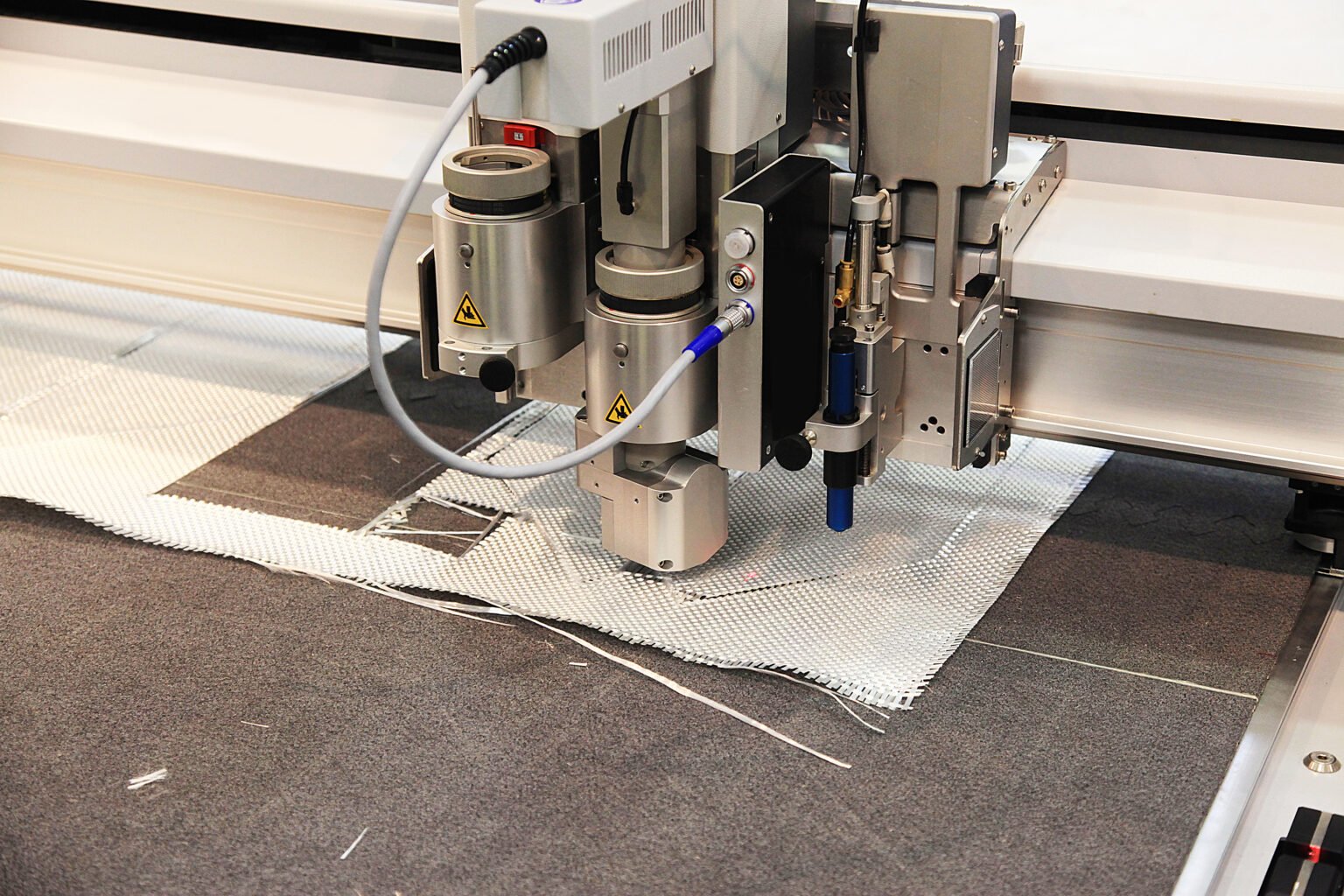
Composite materials are now widely used in the off-highway industry due to their advantages, including lighter weight, higher strength, and enhanced durability. Among the various manufacturing methods, Resin Transfer Molding (RTM) stands out as a prominent technique for producing composite parts, though it is not the only option available. This article compares RTM with other common composite manufacturing processes—such as vacuum infusion, hand lay-up, and autoclave molding—by examining their benefits, limitations, and suitability for off-highway applications.
Resin Transfer Molding (RTM): Overview and Benefits
Resin Transfer Molding (RTM) is a closed-mold process in which resin is injected into a mold containing pre-shaped fiber reinforcement. It is widely recognized for its ability to produce complex, high-quality components with excellent surface finishes. Key advantages of RTM for off-highway applications include:
- Accuracy and Consistency: RTM provides precise control over resin flow and fiber placement, ensuring consistent and repeatable part quality—essential for meeting strict performance standards.
- Ability to Create Complex Shapes: The process supports intricate geometries and integrated features, making it ideal for parts like vehicle panels, structural components, and enclosures.
- Superior Surface Finish: Its closed-mold setup delivers smooth finishes on both sides of the component, reducing the need for additional finishing work.
Despite these advantages, RTM requires carefully designed molds and can involve higher tooling costs, especially for low production volumes.
Vacuum Infusion: A Versatile Option
Vacuum infusion is also a closed-mold technique, but instead of injecting resin under pressure, it uses vacuum force to draw resin into the mold.
- Reduced Tooling Costs: Compared to RTM, vacuum infusion typically involves lower tooling expenses, making it suitable for large parts or smaller production runs.
- Material Versatility: It supports a wide variety of fibers and resins, allowing flexibility based on application requirements.
- Better Fiber Saturation: The vacuum helps achieve thorough resin distribution, which can improve the strength of the final product.
However, vacuum infusion may lack the precision of RTM when dealing with highly complex designs, and the surface finish is generally less refined, often requiring extra finishing.
Hand Lay-Up: Simple and Economical
Hand lay-up is one of the most traditional composite manufacturing methods. It involves manually placing fiber layers in an open mold and applying resin by hand.
- Low Initial Investment: Minimal equipment and tooling make it the most affordable option for small-scale production or prototyping.
- Design Flexibility: The process allows easy adjustments during fabrication, making it suitable for custom or unique parts.
On the downside, hand lay-up is labor-intensive and less consistent. The final quality depends heavily on operator skill, and slow production speeds make it unsuitable for large-scale thermoforming.
Autoclave Molding: High-Performance Solution
Autoclave molding is commonly used for producing advanced composite components, especially in industries like aerospace and defense. It involves curing resin-impregnated fibers under controlled heat and pressure inside an autoclave.
- Exceptional Strength and Stiffness: The process produces parts with superior mechanical properties due to high-pressure curing.
- Excellent Surface Quality: Like RTM, it delivers smooth, high-quality finishes with minimal need for post-processing.
However, autoclave molding is costly and time-intensive, with high equipment and operational expenses. It is generally reserved for applications where performance outweighs cost concerns.
Suitability for Off-Highway Applications
Selecting the appropriate composite manufacturing method for off-highway use depends on factors such as cost, production volume, complexity, and performance needs.
- RTM is ideal for medium to high-volume production of complex, high-performance components like structural parts and vehicle panels.
- Vacuum Infusion provides a cost-effective balance, making it suitable for larger components or lower production volumes where material flexibility is important.
- Hand Lay-Up works best for prototypes, custom builds, or small-scale production where budget constraints are significant.
- Autoclave Molding is preferred for high-performance parts that must meet strict mechanical requirements, though it is rarely used for high-volume off-highway production due to its cost.
Conclusion
Choosing the right composite manufacturing technique plays a vital role in achieving the desired balance between performance, cost, and efficiency in off-highway vehicle production. While RTM offers clear advantages for producing complex, high-quality components, other methods like vacuum infusion, hand lay-up, and autoclave molding each serve specific purposes. Understanding the strengths and limitations of these processes enables manufacturers to select the most suitable approach for their production goals and application requirements.